Quick answer: A free printable reading log is a simple sheet where readers write the date, the book title, the pages or minutes they read and a quick note. Kids use it to build a daily reading habit and meet school goals, while adults use it to track books, ratings and favorite quotes. Print our free reading tracker below, keep it in the book you are reading, and fill in one line each day.
Reading every day is one of those habits everybody wants and few people keep. A reading log makes the habit visible. Each line you fill in is a small win, and after a few weeks you can look back at a page full of books, minutes and memories. A free printable reading log costs nothing, takes seconds to use, and works for a first grader learning to read as well as for an adult with a goal of 50 books a year.
This guide covers what to include on a reading log, how to use one with kids and with yourself, fun ways to keep everyone motivated, and the free and low cost reading printables our team designed.
Why keep a reading log?
- It builds a daily habit. Seeing an empty line for today is a gentle push to pick up the book.
- It shows progress. Kids love counting the books they have finished, and adults love seeing a full year on paper.
- It helps you remember. A one line note about a book can bring the whole story back months later.
- It makes school logs easy. Many teachers ask for a weekly or monthly reading log, and a printable keeps it in one place.
- It turns reading into a game. Goals, streaks and rewards all start with a log.
What to include on a reading log
The best reading log is short enough to fill in every day. Here are the columns that matter most.
| Column | Kids | Adults |
|---|---|---|
| Date | Yes | Yes |
| Book title | Yes | Yes |
| Author | Optional | Yes |
| Pages or minutes | Minutes is easier | Pages is common |
| Parent initials | For school logs | No |
| Rating | Stars or a smiley face | Stars out of 5 |
| Notes | One favorite part | Quotes and thoughts |
For young readers, keep it to date, title and minutes with a small picture or smiley to color. For older readers, add a short note about what happened or how the book made them feel.
Our free printable reading log
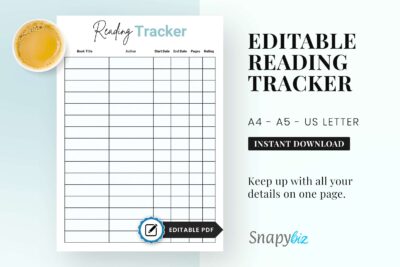
Our free reading tracker gives you a clean, editable page for tracking titles, progress and thoughts. Print a stack, keep one in your bag and one by the bed, and start today.
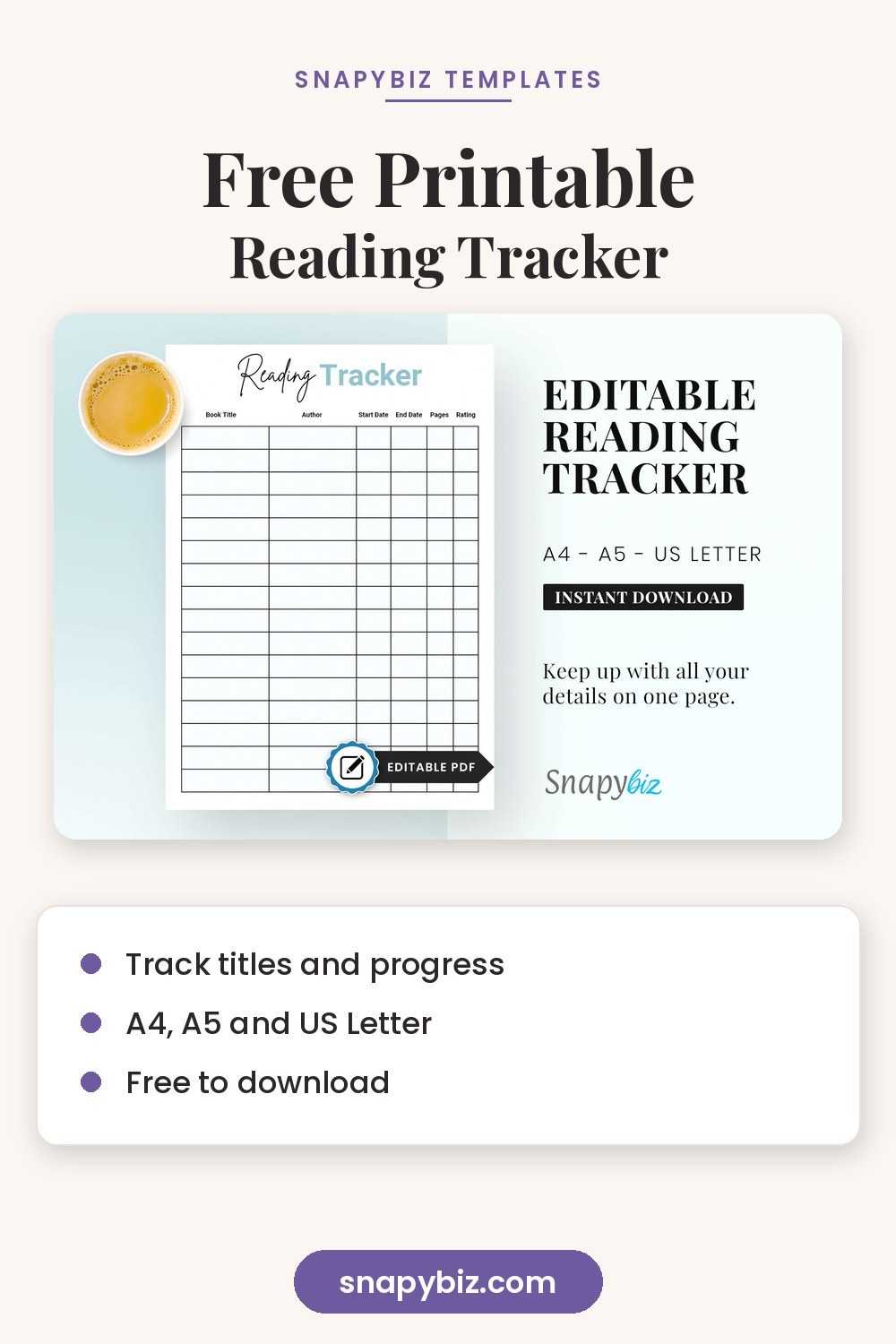
Free Printable Reading Tracker
Free
A free, editable reading tracker in A4, A5 and US Letter for books, progress and notes.
Get it freeA free monthly reading log for November
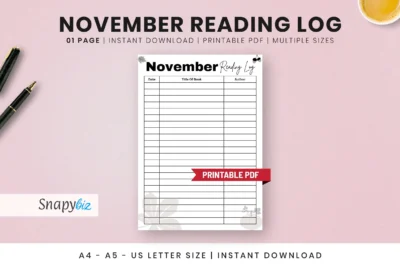
Monthly logs are perfect for school challenges and for anyone who likes a fresh start each month. This November log has room for what you read, how far you got and what you thought.
November Reading Log Free Printable Template
Free
A free monthly log to record what you read, how far you got and what you thought.
Get it freeHow to use a reading log with kids
A reading log should feel like a reward, not homework. These ideas keep it fun.
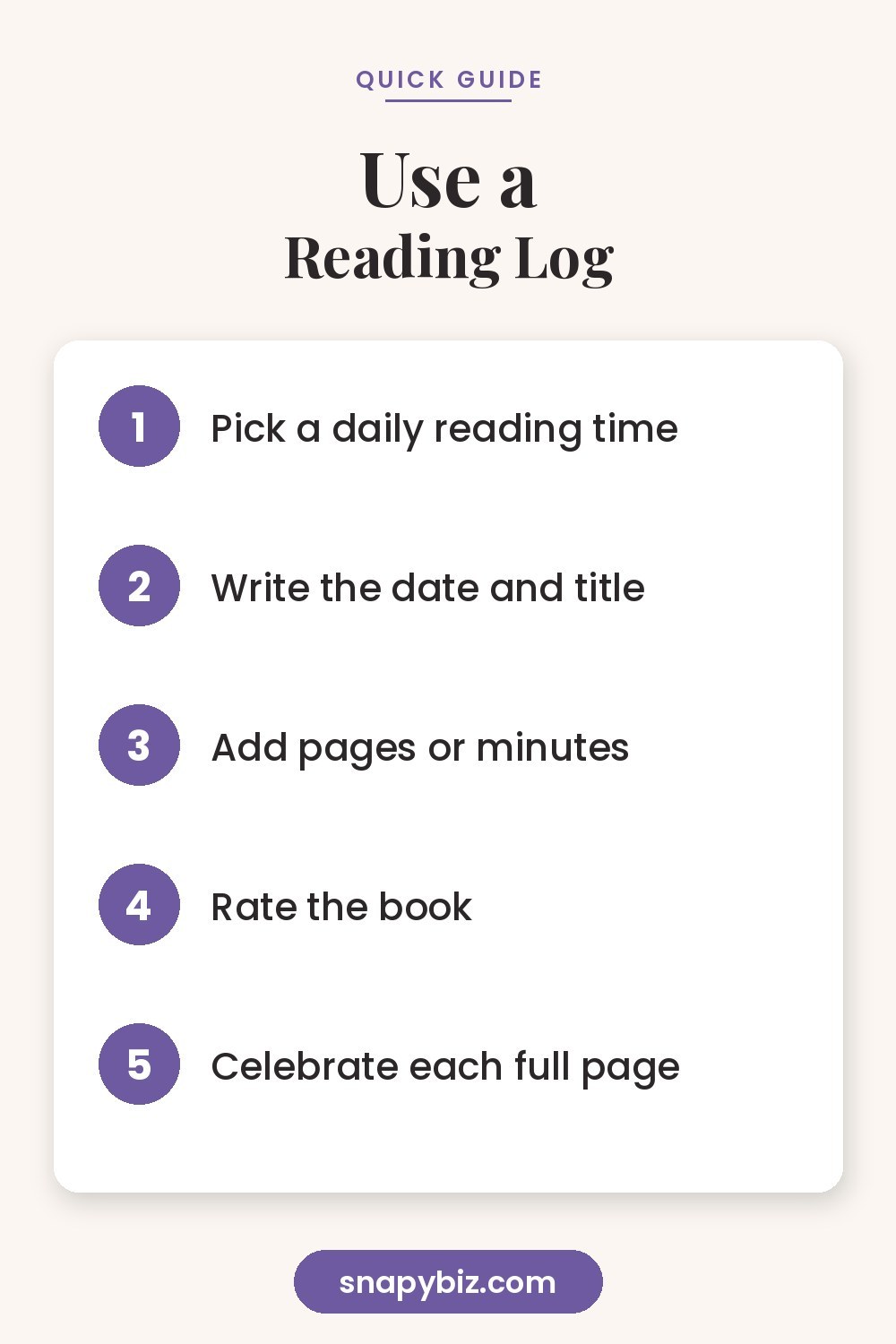
- Pick a regular reading time. Right after school, after dinner or at bedtime. Same time every day makes the habit stick. Some families add reading to their kids chore chart so it sits right next to brushing teeth and making the bed.
- Let them choose the book. Comics, picture books, joke books and audiobooks all count. Interest matters more than level.
- Track minutes for little ones. Ten or fifteen minutes is a great start for early readers. Older kids can aim for 20 to 30.
- Let them fill it in. Writing the title themselves practices spelling and gives them ownership.
- Celebrate milestones. Five books read, a full week with no missed days or a full page of the log all deserve a small celebration.
- Read together. Take turns reading pages aloud. Parent reading time can count too, especially for younger kids.
Fun reading rewards that are not candy
- Choosing the next family movie
- A trip to the library or bookstore
- Staying up 15 minutes later to read
- A printed certificate to hang on the wall
- A new bookmark or reading light
Certificates are a big hit with kids. Our free printable certificates include designs you can edit with your child’s name and hand out when the log is full.
How to use a reading log as an adult
Adults use reading logs differently. You may already read every day, but you want to remember what you read, notice patterns and hit a yearly goal.
- Set a realistic yearly goal. One book a month is a lovely start. Two a month is 24 books a year.
- Track pages and dates finished. This helps you see how long different kinds of books take you.
- Rate every book. A quick star rating helps when friends ask for recommendations.
- Write one line of thoughts. What surprised you, a favorite quote or who you would give it to.
- Note where it came from. Library, a friend, a book club or a new release you bought.
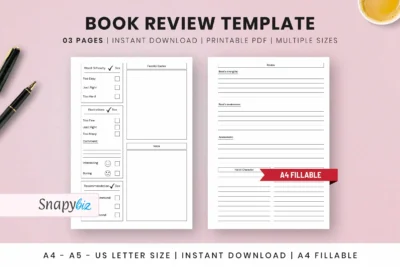
If you love writing more than one line, a full book review page gives you room for characters, favorite quotes and a final verdict. It makes a beautiful keepsake for book club members.
Book Review Template Printable for Avid Readers
$1.50
A full page for characters, favorite quotes, ratings and your final thoughts on each book.
Get this templateReading log ideas for teachers and book clubs
- Classroom reading challenge. Give each student a monthly log and add a sticker to a class chart for each completed page.
- Read a thon. Students log minutes for a set week and the class works toward a shared goal.
- Book bingo. Pair the log with a bingo card of genres, such as a mystery, a biography, a book over 300 pages or a book set in another country.
- Book club tracker. Members log their pages each week before meeting, so everyone arrives ready to talk.
- Family reading wall. Each family member has a log on the fridge, and everyone tallies their minutes on Sunday.
A reading tracker for Quran reading
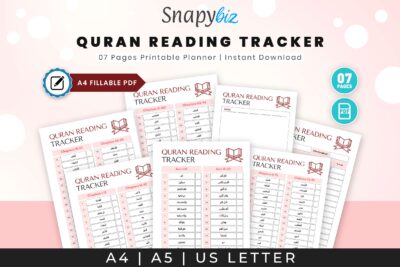
Many families also keep a separate log for daily Quran reading, especially during Ramadan. A dedicated tracker gives you pretty pages to plan your daily reading, record your progress and jot down reflections, alongside your regular book log.
Printable Quran Reading Tracker
$1.50
Printable pages to plan daily Quran reading, track progress and write reflections.
Get this templateReading log ideas by age
Different ages need different logs. Here is a simple guide.
| Age | What to track | Daily goal |
|---|---|---|
| 4 to 6 | Title, a sticker or drawing | 10 minutes, often read aloud together |
| 7 to 9 | Title, minutes, parent initials | 15 to 20 minutes |
| 10 to 13 | Title, pages, one sentence summary | 20 to 30 minutes |
| Teens | Title, pages, rating, favorite quote | Their own goal, often a set number of books |
| Adults | Title, author, dates, rating, notes | Whatever fits your week |
Younger kids enjoy coloring a small picture or adding a sticker for every book. Older kids often like seeing a running total of pages, which feels grown up and shows real progress across the school year.
Tips to keep your reading log going
- Keep it inside the book. Use the folded log as a bookmark so it is always there when you read.
- Fill it in right away. Ten seconds after you close the book is easier than trying to remember tomorrow.
- Do not break the chain. Mark each reading day with a color and try not to leave gaps. Our free printable habit tracker works well alongside your log if you want to track reading with other daily habits.
- Count audiobooks. Listening counts, especially for busy adults and kids still learning to decode words.
- Review every month. Count books and minutes, then set next month’s goal.
- Mix it up. If reading feels like a chore, switch genres, try a graphic novel or reread an old favorite.
How to print your reading log
- Print on regular printer paper for daily logs and on cardstock for logs that live inside a book as a bookmark.
- Our reading printables come in A4, A5 and US Letter sizes, so choose the one that fits your printer or planner.
- A5 fits nicely inside most paperbacks and journals.
- Print a stack at the start of the school year or the new year, so you never run out.
Frequently asked questions
What should a kids reading log include?
The date, book title and minutes read, plus a space for a parent to sign if the log goes to school. A small rating or drawing box makes it more fun.
How many minutes a day should kids read?
Many teachers suggest about 20 minutes a day for school age kids. Younger children can start with 10 to 15 minutes and build up.
Do audiobooks count on a reading log?
For most families and many classrooms, yes. Ask your child’s teacher if a school log has its own rules.
What is the difference between a reading log and a reading tracker?
A reading log usually records each reading session with dates and minutes. A reading tracker often shows the bigger picture, such as books finished, ratings and yearly goals. Many people use both.
How do I get a reluctant reader to use a reading log?
Let them choose the books, keep the log short and celebrate small milestones with a reward they care about.
Summary
A free printable reading log turns reading into a habit you can see. Keep it short, fill in one line each time you read, and celebrate milestones along the way. Kids can track minutes and earn rewards, while adults can track books, ratings and favorite quotes toward a yearly goal. Download our free reading tracker and monthly log to start today, and add a book review page when you want to remember every story.