Quick answer: A funeral thank you note can be two or three sentences: thank the person, name what they did, and share what it meant to your family. “Thank you for the beautiful lilies. They brought comfort to all of us this week.” There is no deadline, and a family member or friend can write notes for you. Below are gentle examples for flowers, meals, donations, cards, service helpers and caregivers.
When someone you love has died, writing notes can feel like one more thing on a long list. Please be kind to yourself. These notes do not need to be long or perfect. The funeral thank you card wording below is short on purpose. A simple, honest line is enough, and the people who helped you will be glad to hear from you whenever you are ready.
Who should you send a thank you note to?
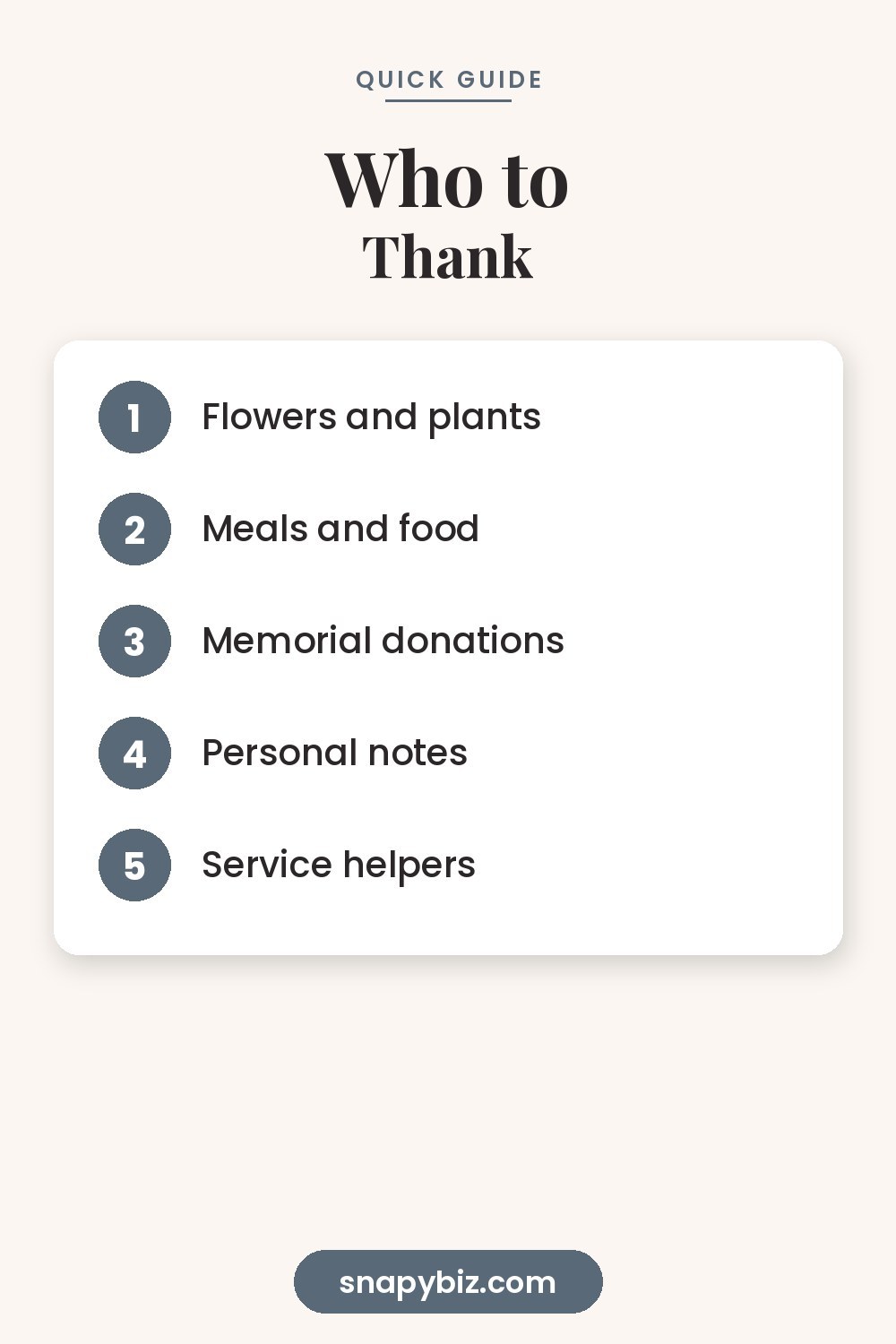
The Emily Post Institute suggests a written note for anyone who sent:
- A handwritten sympathy note or a personal email
- Flowers or a plant
- A donation to a charity in your loved one’s name
- A Mass card or other religious offering
- An act of kindness, like a meal, a ride or help at home
Notes are also customary for pallbearers, honorary pallbearers, ushers, the person who gave the eulogy, and readers.
You do not need to send a written note for a printed sympathy card with only a signature, an online condolence message, or a visit to the funeral home or service. You may still choose to, if it brings you comfort.
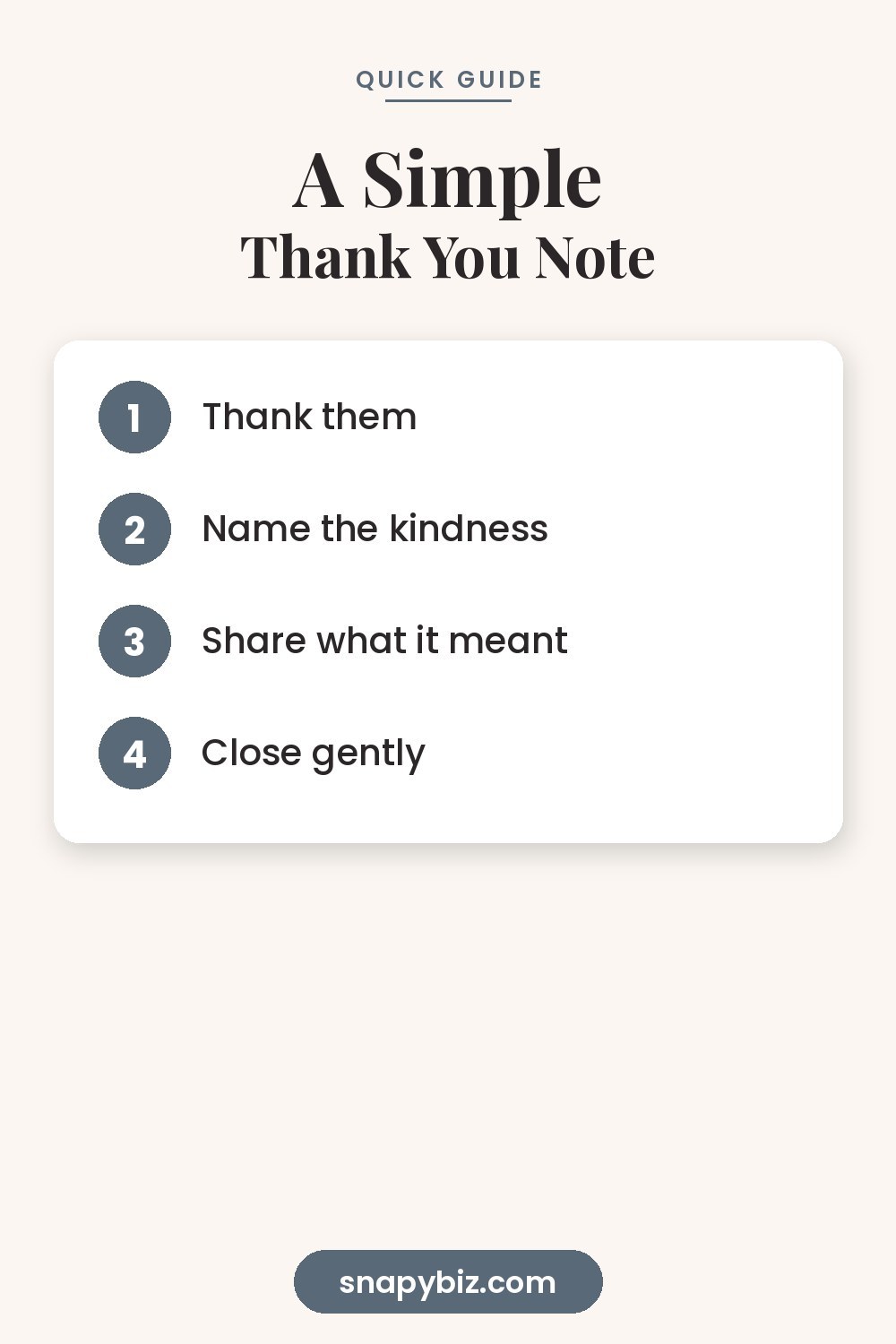
A simple way to write each note
- Thank them. “Thank you for…”
- Name the kindness. “…the beautiful white roses.”
- Share what it meant. “Seeing them at the service reminded us how many people loved Dad.”
- Close gently. “With gratitude, the Rivera family”
That is all. Two to four sentences is the right length.
Thank you notes for flowers and plants
- “Thank you for the lovely flowers you sent for Mom’s service. They were a bright and gentle comfort to all of us.”
- “Your peace lily is in our kitchen window. Every time we water it, we think of your kindness.”
- “Thank you for the beautiful arrangement. Grandpa always loved yellow roses, and it meant so much that you remembered.”
- “We were so touched by the flowers from your family. Thank you for thinking of us.”
Notes for meals and food
- “Thank you for the lasagna and the salad. It was one less thing to think about on a very hard day.”
- “Your soup got us through the first week. Thank you for feeding our family when we could not think about cooking.”
- “Thank you for organizing the meal train. We felt cared for every single night.”
- “The breakfast basket was such a thoughtful gift. Thank you for making sure we ate.”
Notes for memorial donations
Charities often tell the family who gave, but not always the amount. You do not need to mention a dollar figure.
- “Thank you for your generous gift to the American Heart Association in Jim’s memory. He would be honored.”
- “We were deeply moved by your donation to the hospice that cared for Mom. Thank you for helping other families.”
- “Thank you for remembering Aunt Rose with a gift to the library she loved.”
Notes for sympathy cards and kind words
- “Thank you for your kind note. Your memories of Dad made us smile through our tears.”
- “Your card meant a great deal to me. Thank you for sharing the story about our fishing trip.”
- “Thank you for your thoughtful words. They have been a real comfort.”
Notes for pallbearers, speakers and clergy
- “Thank you for serving as a pallbearer for Grandpa. It meant so much to have you carry him with such care.”
- “Your eulogy captured Mom perfectly. Thank you for finding the right words when we could not.”
- “Thank you for leading such a peaceful and beautiful service. Your words brought our family comfort.”
- “Thank you for the music at the service. Dad’s favorite hymn was the perfect goodbye.”
Notes for caregivers, hospice staff and doctors
- “Thank you for the gentle care you gave Mom in her final weeks. You treated her with such dignity, and you made it easier for all of us.”
- “To the hospice team: thank you for your patience, your kindness and the extra time you always took to explain things.”
- “Thank you for caring for Dad for so many years. He spoke of you as a friend.”
Notes for coworkers, neighbors and friends
- “Thank you to everyone in the office for the card and the plant. Your support made coming back a little easier.”
- “Thank you for watching the kids and walking the dog. You helped more than you know.”
- “Thank you for picking up our relatives from the airport. It was one less worry during a very hard week.”
When should funeral thank you notes be sent?
There is no set deadline. The Emily Post Institute says on its bereavement questions page that the important thing is the comfort you received, and that you should work at your own pace. Many families send notes within a few weeks to a few months, but later is fine.
If the list is long, you have options:
- Ask for help. A family member or close friend can write notes for you: “Mom has asked me to thank you for your beautiful flowers and kind words.”
- Use printed cards first. If the funeral home gave you printed acknowledgment cards, add one handwritten line, like “Thank you for the beautiful flowers.” These can serve as a first thank you until you are ready to write more.
- Write a few at a time. Three notes a day is a gentle pace.
Keep track with a free printable list
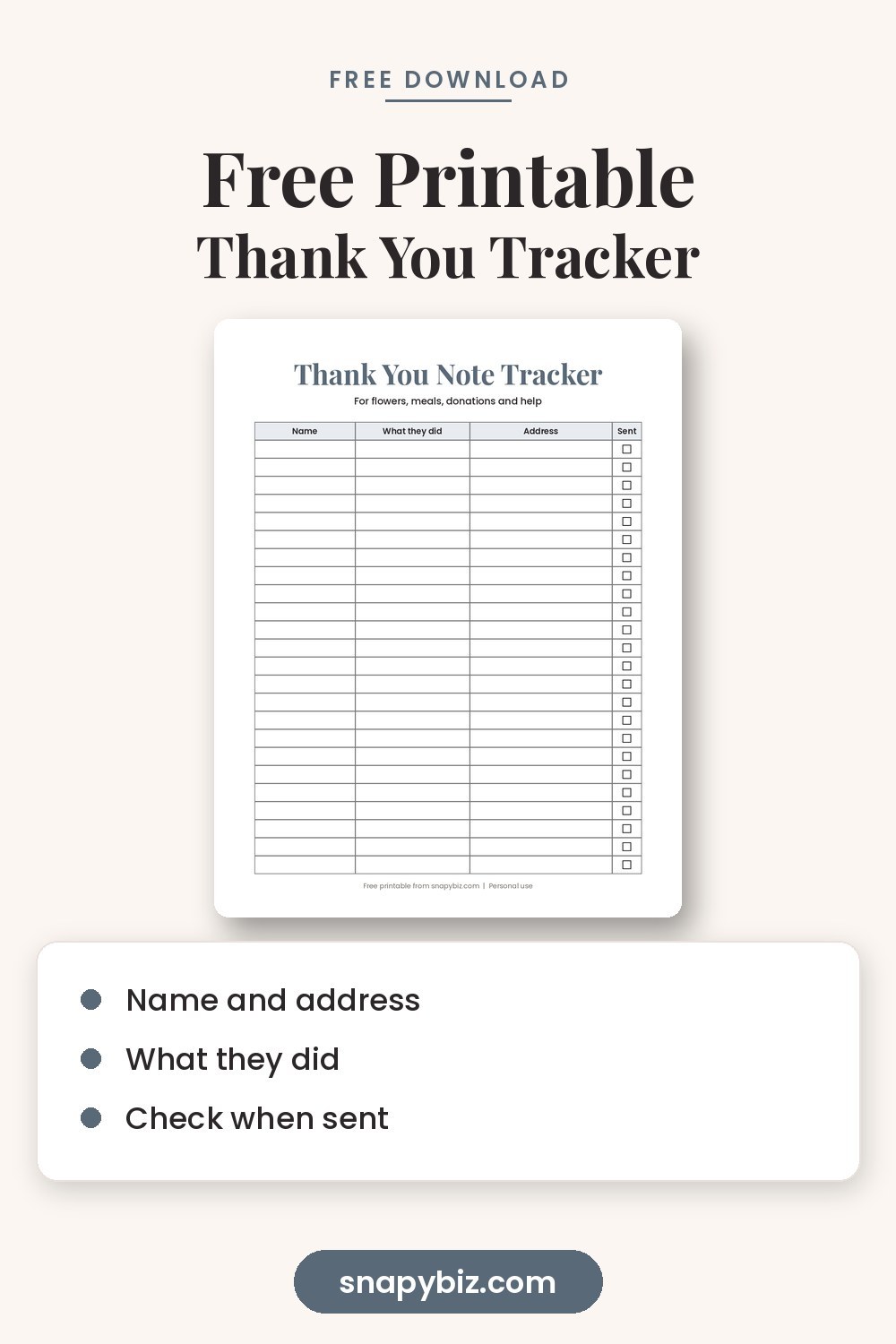
Ask someone at the service to collect flower cards and write down who sent what. Then use our free tracker to note each name, what they did, their address and a check box for “sent.”
Download the free thank you note tracker, PDF
What to write on the envelope and how to sign
- Address the envelope to the person or the family, for example “The Chen Family.”
- Sign the note from yourself or from the family: “With love, Maria,” or “With gratitude, the Okafor family.”
- Simple, plain cards are best. White, cream or soft gray with a short “Thank You” or “With Gratitude” on the front.
Frequently asked questions
Is it okay to send a funeral thank you note by email?
A handwritten note is preferred for flowers, gifts and donations. A short email is fine for coworkers or people who reached out by email, and a personal email is better than no note at all.
Do I need to thank everyone who came to the funeral?
No. Attending the visitation or the service does not need a written thank you. Notes are for people who sent something personal or helped in a specific way.
What if someone sent a card that says “no need to reply”?
You do not have to write back. That message is their gift of kindness to you.
Can children help write notes?
Yes. Older kids can write a line or sign their name. It can be a gentle way for them to take part.
How long should the note be?
Two to four sentences is plenty. Thank them, name the kindness, and say what it meant.
Summary
Thank people who sent flowers, meals, donations, personal notes or practical help, and those who took part in the service. Keep each note short and sincere. There is no deadline, and it is okay to ask someone to help. Our free tracker can keep the list in one place.
References
- Emily Post Institute, Sympathy Notes and Letters, who to acknowledge and how.
- Emily Post Institute, Bereavement Questions and Answers, timing and getting help.
- Emily Post Institute, Different Ways to Say Thank You, handwritten notes and email.